Quick answer
- What this covers: Virtual assistant for entrepreneurs costs 2-3x the quoted rate once management is factored in.
- Who it’s for: Small business owners considering a virtual assistant.
Most entrepreneurs pay $2,500 per month for a virtual assistant they quoted at $15 per hour. Virtual assistant for entrepreneurs costs go up 2-3x once you count management time, onboarding, and turnover. The work you save often gets replaced by the work of managing someone. Here is exactly what to pay, when it is worth it, and when you are better off not hiring at all.
Key takeaways:
- Most entrepreneurs pay $2,500-3,000/mo all-in for a VA quoted at $15/hr once management time is included
- VAs work best for documented tasks that require human judgment, not high-volume repeatable work
- Email triage, customer tracking system (CRM) updates, and follow-up sequences are better automated than delegated
- An AI agent at $750/mo covers 70-80% of what entrepreneurs hire VAs to do
- The 4-Question VA Test (documented? judgment needed? frequency? turnover risk?) filters any delegation decision before you hire
In this article:
- What a Virtual Assistant for Entrepreneurs Actually Does
- What a Virtual Assistant for Entrepreneurs Costs in 2026
- When a Virtual Assistant Is the Right Call
- When a Virtual Assistant Is NOT the Right Call
- The Alternative: AI Agents vs. Virtual Assistants
- How to Decide: A Simple Framework
- What Managing a VA Actually Looks Like Week to Week
- Common Mistakes Entrepreneurs Make When Hiring a VA
What a Virtual Assistant for Entrepreneurs Actually Does
What is a virtual assistant for entrepreneurs? A virtual assistant for entrepreneurs is a remote contractor who handles delegated tasks including inbox management, scheduling, research, data entry, and customer support. They typically cost $8-65/hr depending on skill level and location. Unlike employees, VAs require no benefits or office space, but they do require management time, documentation, and clear direction on every task.
A VA is a remote worker who handles tasks you delegate. That's the definition. The reality varies widely depending on the skill level you hire and the tasks you give them.
For the full rundown of exactly which tasks to hand off, see tasks for a virtual assistant. It covers what works, what doesn't, and what AI handles better.
Common tasks VAs handle well:- Inbox management and email triage
- Calendar scheduling and meeting coordination
- Data entry and CRM updates
- Travel booking
- Basic research
- Social media scheduling (not strategy)
- Customer service tickets (following a script)
- Anything that requires business judgment
- Strategic decisions
- Complex writing that needs your voice
- Managing other people or vendors
- Tasks that require specialized expertise (bookkeeping, legal, technical work)
The honest truth: most VAs are excellent executors. They're not business partners. They follow instructions well when instructions are clear. When tasks require context, judgment, or independent decision-making, you'll spend more time managing the VA than the task is worth.
For the full picture on how VAs fit into your staffing strategy, virtual assistant for small business covers everything you need to know.
What a Virtual Assistant for Entrepreneurs Costs in 2026
Cost is where most entrepreneurs get surprised. A virtual assistant for entrepreneurs isn't a $10/hr hire if you want someone competent.
| VA type | Hourly rate | Monthly cost (20 hrs/week) | What you get |
|---|---|---|---|
| Entry-level (overseas) | $8-15/hr | $640-1,200/mo | Basic admin, data entry, scheduling |
| Mid-level (overseas) | $15-25/hr | $1,200-2,000/mo | Inbox management, customer support, research |
| Experienced (overseas) | $25-40/hr | $2,000-3,200/mo | Project management, specialized tasks |
| Domestic VA | $35-65/hr | $2,800-5,200/mo | Higher-context tasks, native English |
Offshore VAs in the $8-15/hr range can be excellent. But finding the right one takes real screening. The first two or three candidates you trial probably won't be the right fit. Budget for a 30-60 day discovery period, not just a single test task.
That's just the rate. Add:
- Onboarding time: 20-40 hours of your time to train them
- Management overhead: 30-60 minutes daily to assign, review, and correct work
- Turnover cost: Average VA tenure is 6-12 months. When they leave, you start over.
According to Bureau of Labor Statistics data, employers typically spend 25-40% of a contractor's billable time on oversight, briefing, and rework review. That overhead rarely shows up in the quoted rate.
For a detailed cost breakdown, our virtual assistant pricing article covers pricing by task type and experience level.
When a Virtual Assistant Is the Right Call
A VA makes sense in specific situations. Here's when the math works.
You need human judgment on recurring tasks. Scheduling a complex multi-timezone meeting involving personalities you know. Handling a client escalation with empathy. Coordinating vendors who need relationship management. These require a person. You have tasks that can't be automated. Some things genuinely require a human: making a phone call on your behalf, handling physical mail, attending a local event as your representative. You're past the documentation stage. A VA is most effective when your processes are already documented. Handing an undocumented task to a VA means you'll get different results every time. If your workflows aren't written down, document them first. Your volume justifies full-time hours. A VA at 20 hours per week makes economic sense if the tasks they handle genuinely require that time. If you're paying for 20 hours but using 8, you're overpaying.When a Virtual Assistant Is NOT the Right Call
You want proactive help, not reactive execution. VAs wait to be told what to do. An entrepreneur who needs someone to stay on top of leads, proactively follow up, and surface problems before they become crises will find a VA frustrating. VAs are reactive by design. You have high-volume repeatable tasks. Processing every inbound email, updating every CRM record, sending every follow-up. These tasks are better automated. Paying a VA to do work a system could handle costs 10x more and introduces human error. You can't afford the management overhead. Every VA needs direction, feedback, and review. If your schedule is already overloaded, adding VA management to your plate may make things worse, not better. Turnover would hurt you. If your VA holds critical context about your clients, processes, and preferences, and they leave after 8 months, you lose that context with them. An AI agent that retains context indefinitely doesn't have this problem.One business owner lost four months of client and process knowledge when her VA left after 11 months. The replacement took eight weeks to reach the same output level.
Not sure if your tasks are right for a VA? Track everything you do for one week and sort tasks into "requires human judgment" and "follows a repeatable pattern." If more than half are repeatable, automation is the better starting point. Book a strategy call to get a second opinion before you hire.
The Alternative: AI Agents vs. Virtual Assistants
AI agents have changed the math on delegation. For entrepreneurs running high-volume repeatable workflows, an AI agent handles more than a VA at a fraction of the cost.
| Factor | Virtual Assistant | AI Agent |
|---|---|---|
| Monthly cost | $1,200-3,200/mo | $750-1,000/mo |
| Availability | Business hours (or limited) | 24/7 |
| Onboarding time | 20-40 hrs of your time | 10-hr business DNA extraction, once |
| Context retention | Leaves when they do | Permanent |
| Turnover | 6-12 month average tenure | None |
| Proactive behavior | No (needs direction) | Yes (surfaces priorities unprompted) |
| Tasks involving judgment | Better than AI | Better than current AI |
| High-volume repeatable tasks | Slower, higher error rate | Faster, consistent |
This is not an argument that VAs are bad. They're excellent at what they do. The question is whether what they do is what you actually need.
Most entrepreneurs running lean operations, handling high email volume, needing consistent follow-up, and managing multiple clients are better served by an AI agent on the operational side and a specialized human on judgment-intensive tasks.
One e-commerce consultant moved her operational tasks to an AI agent and kept her VA for 6 hours per week of client-facing work. Total monthly spend dropped by $900.
One consulting business owner we worked with moved inbox management and follow-up sequences to an AI agent. They kept a VA for 4 hours per week of client-facing calls. Monthly cost dropped from $2,200 to $1,050. Response times improved from next-day to under an hour.
For a head-to-head comparison, chatbot vs. AI agent explains the full breakdown of what each can do.
How to Decide: The 4-Question VA Test
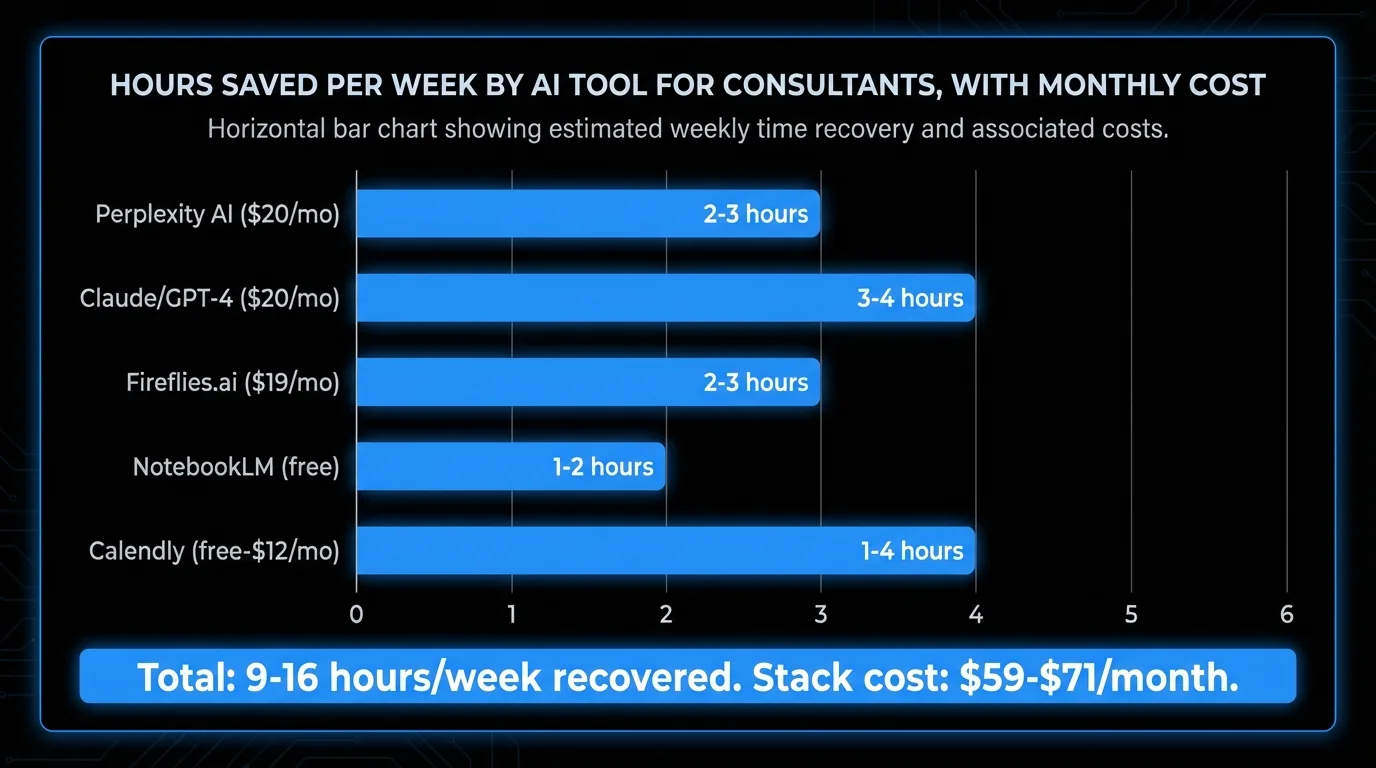
The 4-Question VA Test is a simple decision filter: run any task through four checks before delegating. If it fails two or more, automation is the better starting point.Before hiring a VA, answer these four questions:
- Is this task documented? If no, document it first. A VA needs instructions.
- Does this task require human judgment? If yes, a VA is the right tool. If no, consider automation.
- How often does this task happen? Daily high-volume tasks should be automated. Weekly judgment tasks suit a VA.
- What happens when my VA quits? If the answer is "significant disruption," your process is too dependent on one person.
Many entrepreneurs find that AI handles 70-80% of what they originally planned to give a VA, at less than half the cost. The remaining 20-30% of genuinely judgment-intensive tasks is where a human adds real value.
What Managing a VA Actually Looks Like Week to Week
Take Marcus, a solo e-commerce consultant with $600,000 in annual revenue.
He hires a Filipino VA at $14/hr, 20 hours per week. Total base cost: $1,120/month.
Week one: Marcus spends 8 hours training the VA on his CRM, email templates, and client communication norms. At his $200/hr consulting rate, that training week costs $1,600 in lost billable time before the VA sends a single email.
Weeks two through six: The VA handles inbox triage, scheduling, and follow-up emails. Marcus reviews their work daily, catching three to five errors per week. Average correction time: 45 minutes per day. That is 15 hours per month, or $3,000 in Marcus's time at his billable rate.
Month two onward: The VA is solid. Marcus is down to 30 minutes of daily oversight. Follow-up emails go out on time. His calendar is managed. He estimates he gets back 12 hours per week of his own time, which he redirects to client work.
The math: $1,120/month VA cost plus $750/month in management time equals $1,870/month all-in. Against 12 recovered hours per week at $200/hr, that is $9,600/month in recovered billing potential. For Marcus, the return on investment (ROI) is real.
Now here is the version that does not work.
Sarah runs a two-person marketing agency. She hires a VA for $1,500/month to handle inbox triage, social scheduling, and client coordination. The VA completes the tasks. But Sarah's work changes weekly based on client needs. Briefs take 30 minutes each to write.
The VA frequently does work Sarah has to redo. After four months, Sarah calculates she is spending 3 hours per day managing the VA and reviewing output. The VA is not bad. The tasks were the wrong fit for the model.
One business runs on predictable, repeatable tasks. The other runs on context-heavy, variable work. Same hiring decision. Completely different results.
One pattern that surprises most owners: management time does not drop as fast as projected. The assumption going in is 15-20 minutes of daily oversight by month three. For businesses where work changes week to week, many owners are still at 45-60 minutes per day at month six. That is not a failing VA. It is the structural cost of variable work that requires constant briefing.
Before hiring, map your tasks to one of two categories: tasks that follow a clear repeatable pattern, and tasks that require judgment and context. If more than 60% of your delegation targets fall into the second category, a VA will create more work than they solve.
Common Mistakes Entrepreneurs Make When Hiring a VA
Hiring before documenting.A VA without written instructions is guessing. They will guess wrong. The first check in The 4-Question VA Test is documentation: if the task is not written down, the VA is not ready to receive it. A one-page standard operating procedure (SOP) per task cuts onboarding time from 60 days to 30 and reduces errors by roughly half. Write the processes first.
What the documentation step actually costs: a task that takes 20 minutes to do takes 45-90 minutes to document clearly the first time. That investment pays back across hundreds of future runs, but plan for it honestly. Incomplete SOPs produce inconsistent VA work, which leads to rework, which defeats the purpose of hiring in the first place.
Starting with too many tasks.Give a new VA one task. Run it until it is clean. Add a second. Entrepreneurs who hand 12 tasks to a new VA on day one spend the first month cleaning up 12 messes simultaneously.
Choosing the cheapest rate without calculating all-in cost.An $8/hr VA who requires 4 hours of oversight per week costs more than a $20/hr VA who requires 45 minutes. Management burden varies by 3-4x between skill levels. Always calculate: (hourly rate times hours worked) plus (your hourly rate times hours managing). The second number surprises most business owners.
Locking into a package before testing.Test with a paid trial task first. Give a real deliverable with clear requirements. Pay $50 to $100 for honest work. Evaluate accuracy, turnaround, and how they handle an unclear instruction. Only commit to volume once you know the fit is there.
Expecting proactive output.A VA who waits to be told what to do is doing their job correctly. If you need someone to identify priorities, surface risks, and act without direction, a VA cannot do that. That is what an AI agent handles. Know the difference before you hire.
Hiring to solve a documentation problem.If your real issue is that processes are inconsistent and undocumented, a VA does not fix that. They inherit the chaos. Build your core systems first, even rough ones, then delegate them to a VA or tool that can follow them reliably.
What a Managed AI Agent Does Differently
A VA and an AI agent look similar on the surface. Both handle admin. Both free up your time. The differences are what matter.
A VA is reactive. They wait for instructions, ask clarifying questions, and deliver work you review. The management overhead is built into the model. You cannot avoid it.
A managed AI agent is trained on how your business actually works. A 10-hour onboarding session extracts your processes, communication style, clients, and preferences. After that, the agent handles email triage, follow-up sequences, scheduling, research, and reporting without needing direction on each task.
It does not take time off. Context does not walk out the door when it leaves for a better client. No onboarding cost the next time. No six-week ramp before it hits full output.
After working with dozens of business owners on this exact decision, the pattern is consistent: entrepreneurs with mostly repeatable, high-volume work benefit from an AI agent immediately. Those with complex, relationship-heavy tasks benefit from keeping a VA for the judgment layer and using AI for everything around it.
Jejo.ai charges $750/month with a 30-day guarantee. That is less than most mid-level offshore VAs once management time is included, and significantly less than the $2,600/month all-in cost most entrepreneurs actually pay.
This is not a replacement for every VA role. Tasks requiring phone calls, physical presence, or complex human judgment still need a person. But if you have been paying $2,000-$3,000/month for a VA handling inbox management, follow-up emails, and scheduling, the math shifts.
Most entrepreneurs who run the numbers end up with a combination: an AI agent handling the high-volume repeatable work, and a VA covering 5-8 hours per week of genuinely judgment-intensive tasks. Total spend drops. Output stays the same.
See how it works.VA vs. AI Agent: What the Numbers Show
Virtual assistants for entrepreneurs cost $1,200-3,200/month at base rate, but the true all-in cost including management overhead and onboarding typically runs $2,500-3,500/month for a mid-level offshore hire. Average VA tenure is 6-12 months according to Upwork's contractor market data, meaning most business owners cycle through 2-3 VAs over three years. Each transition resets onboarding. An AI agent at $750/month eliminates management overhead, turnover, and ramp-up time entirely for the repeatable work that makes up 60-80% of what most entrepreneurs hire VAs to do.
Who This Is For / NOT For
A virtual assistant for entrepreneurs makes sense if:- You have documented processes and your VA can follow clear instructions with minimal direction
- You need human judgment on recurring, relationship-sensitive tasks: client escalations, complex scheduling, calls on your behalf
- Your business generates $300K+ and the owner's time is worth more than $75/hr
- Most of your delegation targets are high-volume repeatable tasks like email triage, CRM updates, and follow-up sequences
- You don't have documented processes and can't commit 20-40 hours to onboarding
- You need 24/7 availability or proactive task initiation without direction
The Bottom Line
A virtual assistant for entrepreneurs costs $2,500-3,000/month all-in once management time is factored in, not the quoted base rate. Run The 4-Question VA Test on your task list first: if most tasks fail the judgment or documentation check, an AI agent at $750/month covers most of what entrepreneurs hire VAs for and eliminates turnover risk entirely. Book a strategy call to find out which option fits your business.
FAQ
Is a virtual assistant worth it for a solo entrepreneur?
It depends on what you need. If you're drowning in admin work and the tasks require human judgment, a part-time VA can free up 8-12 hours per week. If your biggest time drain is email triage, follow-ups, and CRM updates, automation or an AI agent is a better investment for less money.
The honest test: track every task you do for one week. Categorize each one as "requires human judgment" or "follows a repeatable pattern." If more than half are repeatable, start with automation. If most require real judgment, a VA is likely the better fit. Many solo business owners discover they need both: an AI agent for the high-volume repeatable work and a part-time VA for 5-8 hours of judgment-intensive tasks per week. That combination typically costs $1,500-$2,200/month and replaces 15-20 hours of owner time.
How many hours does a small business VA typically work?
Most small business owners start with 10-20 hours per week. This covers inbox management, scheduling, and basic admin. Full-time VAs (40 hours) make sense for businesses with $500K or more in revenue where the operational complexity justifies it.
Where do entrepreneurs hire virtual assistants?
Common platforms include Upwork, Fiverr Business, Time Etc, Belay, and Fancy Hands. Agency-sourced VAs cost more but come pre-vetted. Freelance platforms are cheaper but require more evaluation time.
Can a virtual assistant replace a full-time employee?
For admin and operational tasks, yes. For judgment-intensive, client-facing, or managerial roles, usually no. A VA is most effective as an extender of your capacity, not a replacement for a role requiring deep expertise or accountability.
The clearest replacement case: a full-time employee whose primary job is inbox management, scheduling, and data entry. A part-time offshore VA at 20 hours/week handles the same volume at 30-40% of the total cost, including your management time. Where it breaks down: roles that require institutional knowledge built over years, client relationship ownership, or decisions that need someone with skin in the game. VAs are contractors. They do not have equity, long-term incentives, or the same accountability as a permanent hire.
What should I test a VA on before committing?
Give them a small paid test project with clear instructions. Measure accuracy, turnaround time, and whether they ask clarifying questions or just guess. The quality of their questions tells you more than the quality of their work. A VA who guesses and gets it wrong once will guess and get it wrong again. A VA who asks smart clarifying questions upfront will do better work and require less rework over time. Pay $75-$100 for the test. It is worth it.
Not sure whether you need a VA or an AI agent?
See how an AI agent compares to a virtual assistant on cost, availability, and output quality. Book a strategy call to find out which option fits your business. Or see the plans to compare pricing.